
Avowed in 2026: A Composer's Perspective on its Enduring Casual-Friendly Design
Avowed's masterful design philosophy brilliantly balances a tight, compelling narrative with rewarding exploration, offering a refreshingly accessible RPG experience that respects players' time.
As I sit here in 2026, reflecting on the games that have left a mark on me, Avowed still holds a special place. It’s funny how time flies; it feels like just yesterday we were all diving into The Living Lands for the first time. What keeps me coming back isn't just nostalgia—it's the brilliant design philosophy that its composer, Venus Theory (Cameron), so perfectly articulated. In a gaming landscape that often equates value with sheer size and endless playtime, Avowed dared to be different. It offered a world rich with secrets and stories but packaged in a way that respected my time. You know that feeling when you buy a massive RPG and it just stares at you from your library, judging you for never finishing it? Avowed was the antithesis of that. It felt like a warm invitation rather than a daunting obligation.
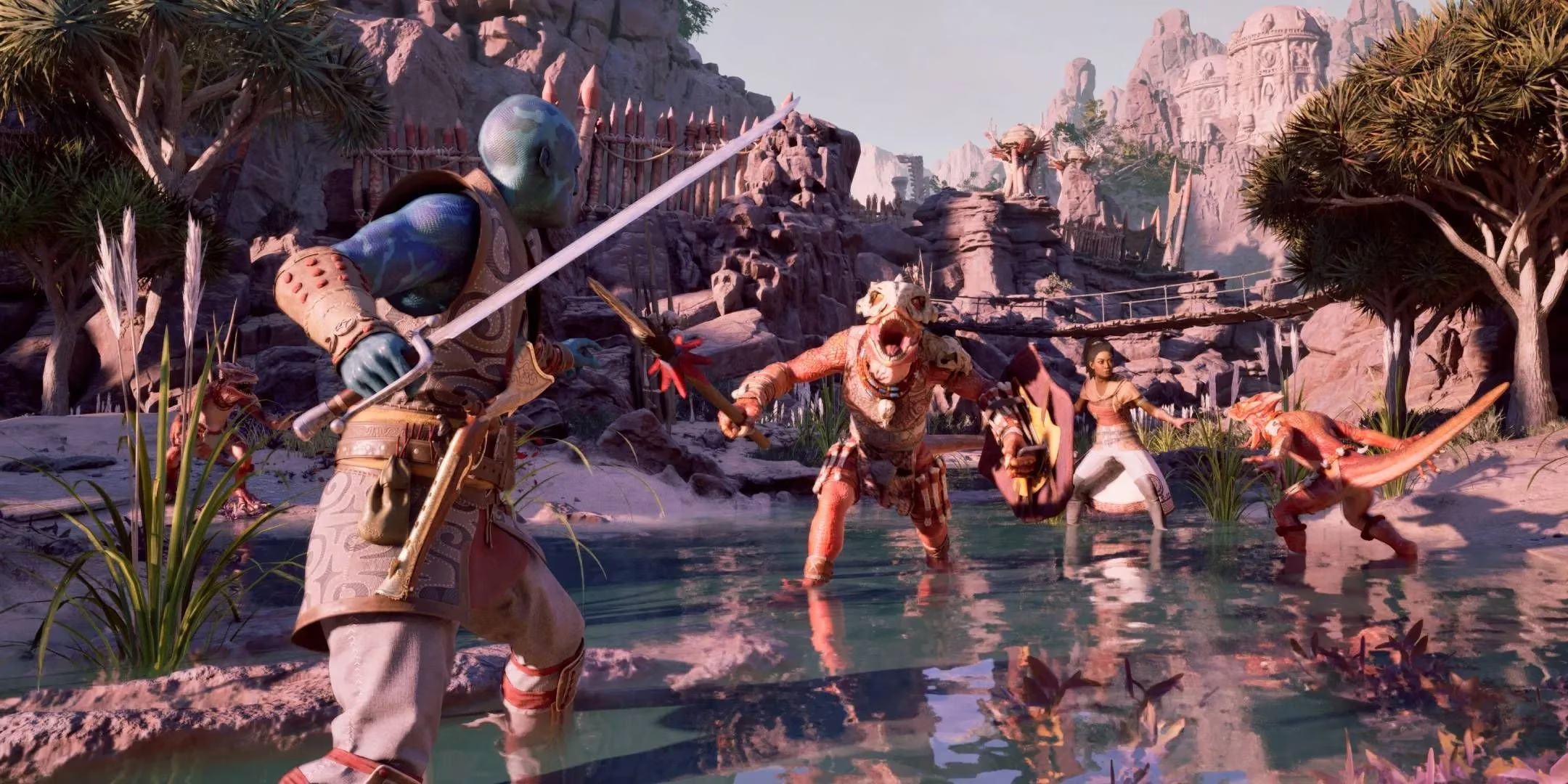
The Genius of a "Tight" Narrative
Venus Theory hit the nail on the head when he praised the game's "tight story." He famously said it was something a casual player could reasonably finish in a couple of weekends if they focused. That wasn't a knock on its depth; it was a celebration of its accessibility. In an era where single-player campaigns can stretch into the hundreds of hours, Avowed was a breath of fresh air. It proved that an epic fantasy tale doesn't need to be an endless marathon. The main quest had a compelling drive, a clear sense of purpose that kept me hooked without ever overstaying its welcome. For someone like me, juggling work and life, this was a game-changer. It was the RPG I could actually complete, and that feeling of satisfaction is priceless.
Striking the Perfect Balance: Depth vs. Bloat
The real magic of Avowed was its masterful balance. Venus appreciated this deeply, noting how it rewarded thorough exploration while remaining manageable for those short on time. The world of Eora, particularly The Living Lands, is dripping with lore and hidden corners. As a fan of Obsidian's previous work in Pillars of Eternity, I loved uncovering connections and secrets. But here's the kicker: I never felt punished for not doing everything.
-
For the Explorer: Every nook and cranny held potential rewards—unique gear, fascinating side stories, environmental storytelling that fleshed out the world. The sidequests felt meaningful, not like filler content.
-
For the Story-Focused Player: You could follow the critical path and still experience a rich, complete narrative arc. The game didn't gate essential story beats behind dozens of hours of optional content.
This balance was no accident. Avowed wisely avoided being a true, seamless open-world like Skyrim. Instead, it adopted a structure more akin to separate acts or distinct zones—similar to Baldur's Gate 3 or Obsidian's own The Outer Worlds. This design choice was its secret weapon:
| Design Approach | Result for the Player |
|---|---|
| Zoned Open Areas | Reduced overwhelming scale and "bloat." |
| Focused Narrative Acts | Maintained strong pacing and story momentum. |
| Optional, Rich Exploration | Preserved player freedom and discovery. |
It created a focused experience where my freedom felt curated and meaningful, not just vast and empty. Man, as a busy adult, that respect for my time is something I wish more games would learn from.
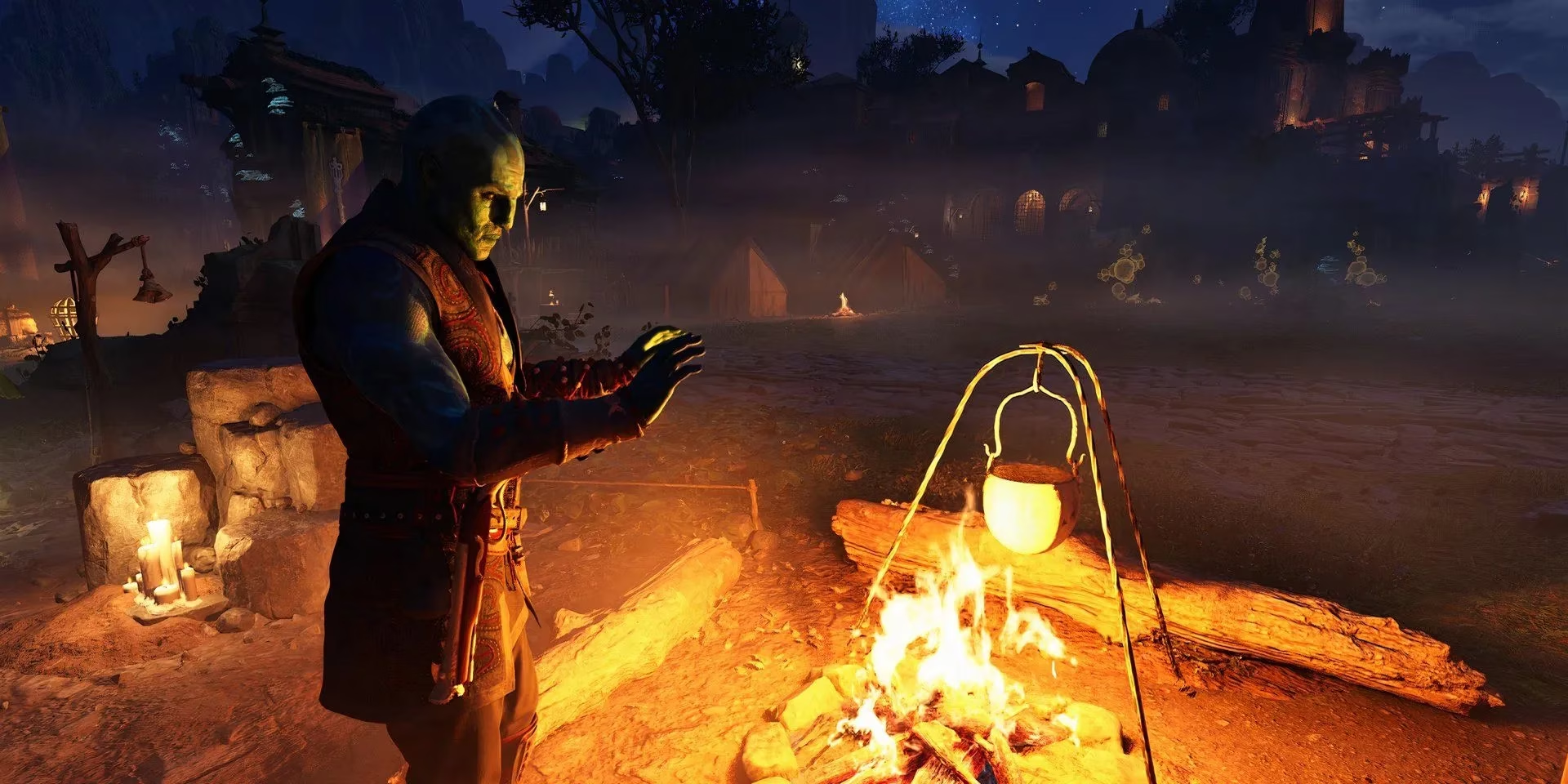
Why It Still Matters for RPG Fans in 2026
Even now, looking back, Avowed stands out as a unique and worthwhile experience for fantasy RPG enthusiasts. Its setting is a huge part of that. Eora isn't some generic fantasy land; it's a world with history, political intrigue, and philosophical depth, built over years through Pillars of Eternity and Deadfire. Stepping into The Living Lands felt like visiting a real place with a past. The RPG mechanics, while adapted for first-person action, retained that Obsidian charm—meaningful choices, character building that mattered, and dialogue that actually reflected who I decided to be.
Critics felt this too. ScreenRant's 9/10 review highlighted the "satisfying and gradual progression" throughout the game. Sure, it wasn't perfect—some higher difficulty spikes or equipment tiers could create friction—but its strengths shone brightly. In a genre often obsessed with more—more map, more quests, more hours—Avowed proved that better often beats bigger. It delivered a condensed, high-quality fantasy adventure that I've replayed multiple times since its release, something I can't say for many 100+ hour epics that now gather digital dust.
A Legacy of Respectful Design
So here we are in 2026. The gaming conversation has slowly started to shift. We're seeing more discussions about sustainable playtime and respecting players' lives outside the screen. Looking back, Avowed feels like a quiet pioneer in that movement. Venus Theory's praise wasn't just about the music he helped create; it was an endorsement of a smarter, more compassionate design philosophy. The game asked, "What if an RPG could be both deep and digestible?" and then answered it beautifully. It showed that you can have a world that feels alive and expansive without demanding your entire social calendar as a sacrifice. For that, as both a player and someone who values their limited free time, I'll always be grateful. It's a lesson in game design that, frankly, more developers should take to heart.