
Avowed in 2026: Two Races, One Lingering Skyrim Shadow
Avowed character creation narrows Eora to human and elf, while Skyrim races and Pillars of Eternity ancestries show the replay depth left behind.
I still remember the first time I opened Avowed's character creator in 2026, more than a year after Obsidian's fantasy RPG launched and the initial noise had cooled. I had just finished another Skyrim replay, cycling through a Breton battlemage, an Argonian thief, and a Dunmer spellsword. Each run felt like a different life. Avowed greeted me with a polished screen, elegant sliders, and a choice that felt narrower than the world I had left behind: human or elf. That moment captured the debate for me. Avowed is not Skyrim, and Obsidian has said as much, but character creation is where the comparison still stings.
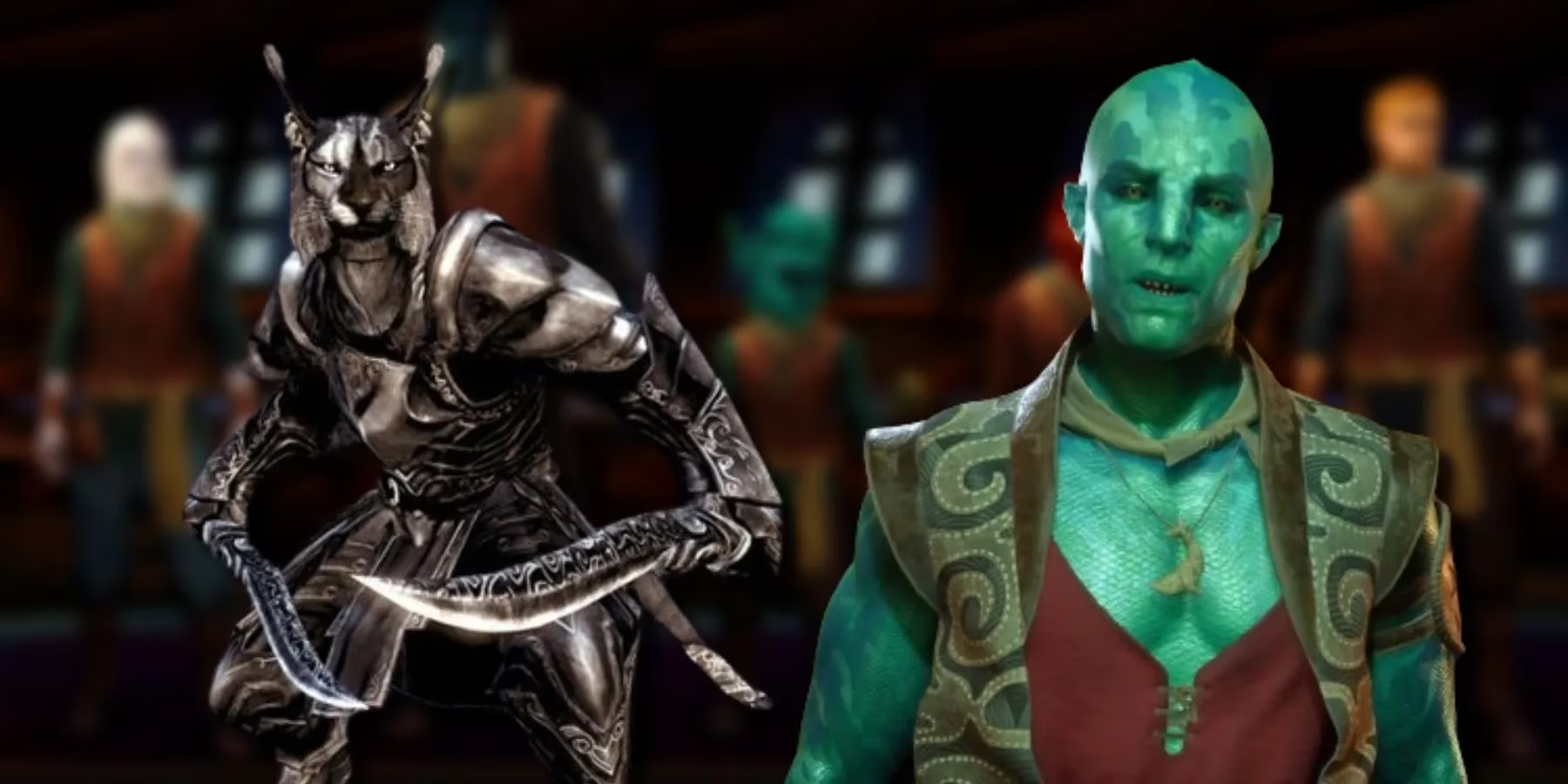
I understand the design reasoning. Eora, the setting of Pillars of Eternity, is full of dramatically different peoples. Aumaua are massive, Orlans are small, Godlike carry divine marks, and dwarves and elves each have distinct silhouettes. If Avowed had made all six Pillars races playable, combat balancing would have become a nightmare: hitboxes, animation rigs, armor scaling, camera framing, and enemy telegraphs all would need to account for bodies of wildly different sizes. Obsidian chose a more consistent approach. In 2026, after patches and endless forum threads, I can respect that practical choice. But respect is not the same as satisfaction.
The table below is the one I keep in my head when I compare the games:
| Game | Playable ancestries | What it means to me |
|---|---|---|
| Avowed | Human, Elf | A focused frame for Eora, but a narrow doorway into it |
| Pillars of Eternity | Human, Aumaua, Dwarf, Elf, Orlan, Godlike | The full social and physical texture of the setting |
| Skyrim | Ten races, from Nord to Khajiit | A sandbox of bodies, cultures, and replay hooks |
That table is not just trivia. It is the difference between visiting a world and inhabiting it. In Pillars of Eternity, the six races come with subraces and cultural baggage. An Aumaua character carries a different physical presence and social history than an Orlan. A Godlike character walks through Eora with visible divine strangeness. When Avowed limits me to human and elf, I can still see those other peoples in the world, but I cannot experience the story from their point of view. For a role-playing game, that limitation matters.
My own replay loop changed because of it. In Skyrim, I make characters to test builds, but also to test perspectives. A Khajiit thief changes how guards speak to me; an Orc warrior changes how I imagine combat; an Altmer mage changes the fantasy in my head. In Avowed, my human ranger and my elf wizard are both enjoyable, but they feel like two windows into the same room. The character creator may be technically detailed, with good sliders and attractive options, yet the sense of possibility shrinks before I even press start. That is the strange thing about choice in RPGs: perception often matters as much as technical depth.
I can already hear the counterargument. A smaller scope can produce a better-balanced game. Avowed's combat is more consistent because the team did not have to solve the problem of a two-meter Aumaua and a tiny Orlan sharing the same dodge timing, armor slots, and first-person camera. I agree with that trade-off on paper. But trade-offs leave marks. The limited ancestry list weakens replayability for players like me who treat character creation as the first act of role-playing. It also narrows the lore. Eora's diversity is one of its richest features, and Avowed shows that diversity in NPCs and environments, yet it holds the player at arm's length from most of it.
Here is how I would summarize the cost in 2026:
-
🧝 Player agency: Two options are easier to balance, but they offer fewer role-playing starting points.
-
🎭 Immersion: Seeing Aumaua and Orlans is not the same as playing one and hearing the world react to that body and history.
-
🔁 Replay value: Skyrim's ten races give me built-in reasons to return; Avowed's two ancestries make me rely more on class and dialogue choices.
-
⚖️ Combat clarity: Obsidian's choice makes sense for hitboxes and animation, but it turns a lore strength into a mechanical compromise.
None of this makes Avowed a bad game. In 2026, I still recommend it to friends who want a focused fantasy RPG with strong world design. But when the conversation turns to Skyrim, I cannot pretend the comparison is unfair. Skyrim's character creator was not the most advanced, yet its breadth of races shaped years of replays and stories. Avowed may have the more polished tool, but polish cannot fully replace the feeling of standing at the edge of six possible lives and choosing one. Obsidian solved a combat problem, and I understand why. As a player, though, I still feel the missing doorways. The comparison will keep following Avowed, and after living with the game, I think that shadow is earned.