
Avowed's Development Journey: From Multiplayer Skyrim to Pillars-Focused RPG
Discover the unexpected secrets and playful mechanics of Avowed's Living Lands, a world transformed from its original 'multiplayer Skyrim' concept into a narrative-driven adventure rooted in Pillars of Eternity lore.
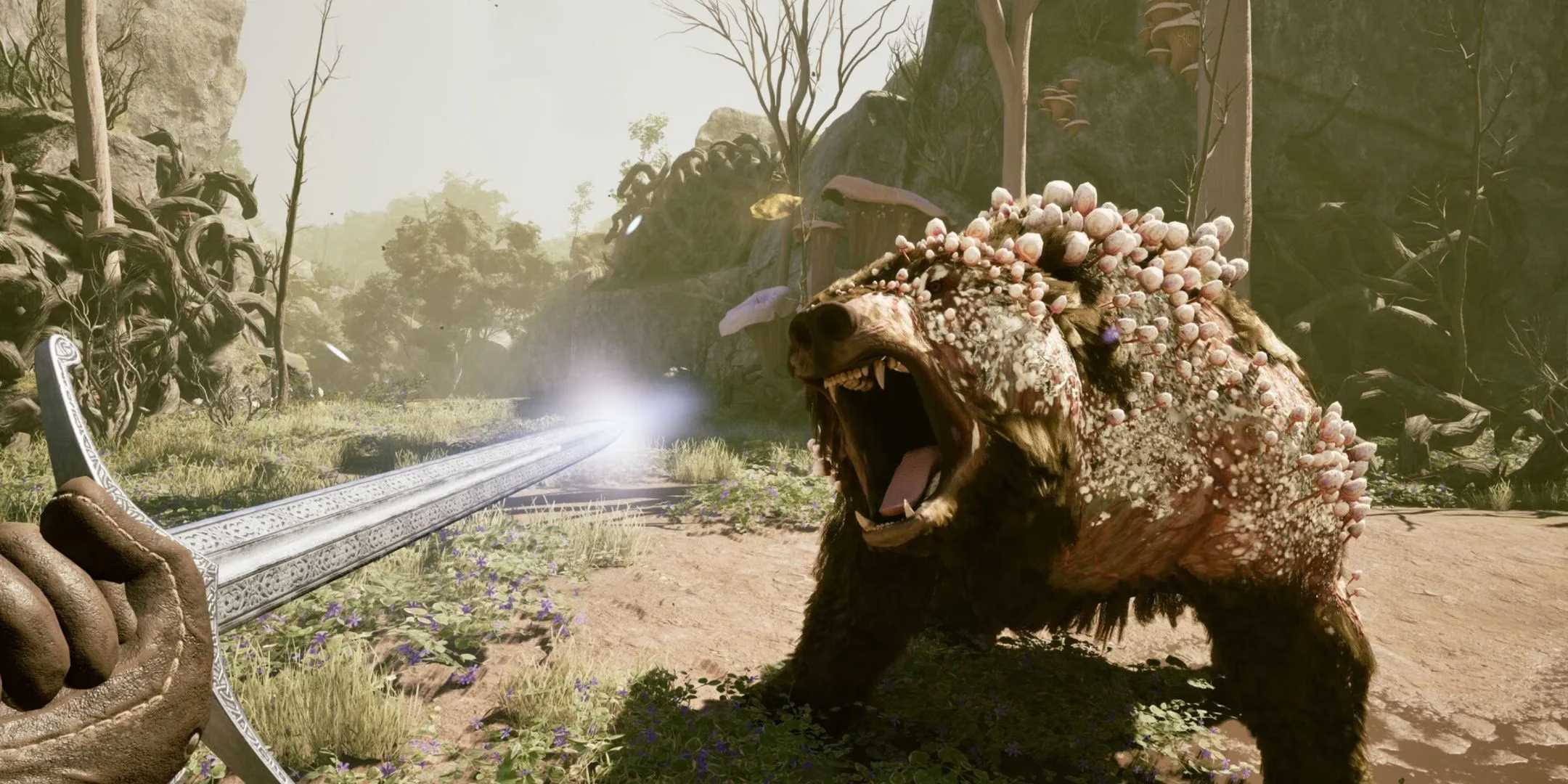
As players continue to explore the Living Lands in Avowed, the vibrant world reveals unexpected secrets and playful mechanics. Gamers have discovered that certain environmental interactions, like the inability to harm chickens or the clever use of ice shields to traverse water surfaces, add layers of whimsy to the adventure. Even a subtle nod to Garrus from the Mass Effect series can be found, tucked away for observant fans. However, what many might not realize is that these very discoveries, and indeed the entire game as experienced in 2026, almost didn't exist. The Avowed that players enjoy today is the product of significant evolution, a journey away from an initial vision that was remarkably different. Had the original premise been maintained, the game's identity and these quirky interactions might have been lost entirely.
The Original Vision: A Multiplayer Fantasy Epic
Initially conceived in 2018, Avowed's development path was set on a course that diverged sharply from Obsidian Entertainment's traditional strengths. Early pitches described the project as a hybrid, aiming to capture the essence of two gaming giants. The goal was to create an experience that blended the shared-world, loot-driven gameplay of Destiny with the vast, explorable sandbox of The Elder Scrolls V: Skyrim. This vision promised a fantastical world where players could adventure together, a significant departure from Obsidian's renowned focus on deep, narrative-driven, single-player role-playing games. But was this ambitious fusion the right fit for the studio known for intricate stories and reactive worlds?
The Pivotal Reboots and a Return to Roots
The answer, as history shows, was a decisive shift. According to detailed reports, Avowed underwent not one, but two major reboots during its development. The most significant of these occurred around 2021, following Microsoft's acquisition of Obsidian and the appointment of Carrie Patel as the game's director. This leadership change catalyzed a fundamental reevaluation. The team moved away from the ambitious "multiplayer Skyrim" concept and refocused on the core pillars that had defined Obsidian's legacy. The reboot centered on two key decisions that would redefine the project:
-
Embracing Established Lore: The game would be firmly rooted in the rich, pre-existing universe of Obsidian's Pillars of Eternity franchise. This provided a deep well of history, factions, and metaphysical rules (like the Soul-based magic of Essence and the haunting Dreamscourge) to draw from, rather than building a new world from scratch.
-
Shifting from "Open World" to "Open Zones": Instead of a single, seamless, and potentially overwhelming landscape, the team designed the world as a series of interconnected, curated regions. Developers have since praised this structure as a "good pacing mechanism," allowing for more focused environmental storytelling and controlled narrative flow—a hallmark of Obsidian's design philosophy.
The Avowed We Know Today
The result of these transformative decisions is the Avowed released to players. It is a game that prioritizes:
-
Character-driven narratives and consequential choice.
-
Strategic, real-time-with-pause combat that encourages tactical thinking.
-
Exploration of thematically dense regions like the vibrant yet dangerous Living Lands.
-
Deep engagement with Pillars of Eternity lore, including conflicts involving gods, souls, and ancient empires.
The playful discoveries players make—like using an Ice Shield spell to create a temporary path across water—emerge from this refined, systems-focused design rather than a sprawling multiplayer sandbox. The game's identity is now inextricably linked to Obsidian's strengths in world-building and narrative depth.
A Foundation for the Future
Carrie Patel's reflections on the development process highlight a studio that has not only delivered a game but has also grown through its creation. "Now that we’ve built this wonderful world, and also built this team strength and muscle memory around the content and gameplay in this world, I’d love to see us do more with it," she stated. This sentiment suggests that the world of Eora, as presented in Avowed, is not a one-off venture. While the initial dream of "Destiny meets Skyrim" was set aside, the rebooted Avowed has established a sustainable and beloved foundation. The journey of its development—from a shared-world concept to a focused, lore-rich RPG—demonstrates the value of a studio playing to its unique strengths. In the end, the reboots were not a setback but a crucial realignment, ensuring that the Avowed players experience is unmistakably and authentically an Obsidian game.