
Avowed's Limited Skill Trees Leave Pillars of Eternity's Most Inventive Classes Behind
Avowed's character-building system disappoints Pillars of Eternity fans, lacking the depth and flavor of Eora’s unique classes.
When Avowed launched in February 2025, it gave players their first real return to Eora in nearly seven years. Fans of Pillars of Eternity had reason to celebrate: Obsidian's shared universe was finally getting an action RPG treatment, full of first-person combat and a promised focus on player freedom. But once the dust settled, a familiar disappointment started to surface. For all of Avowed's spectacle, the character-building system feels like a startling step backward from the wonderfully odd classes that made Pillars of Eternity so memorable.
A classless system that still feels narrow
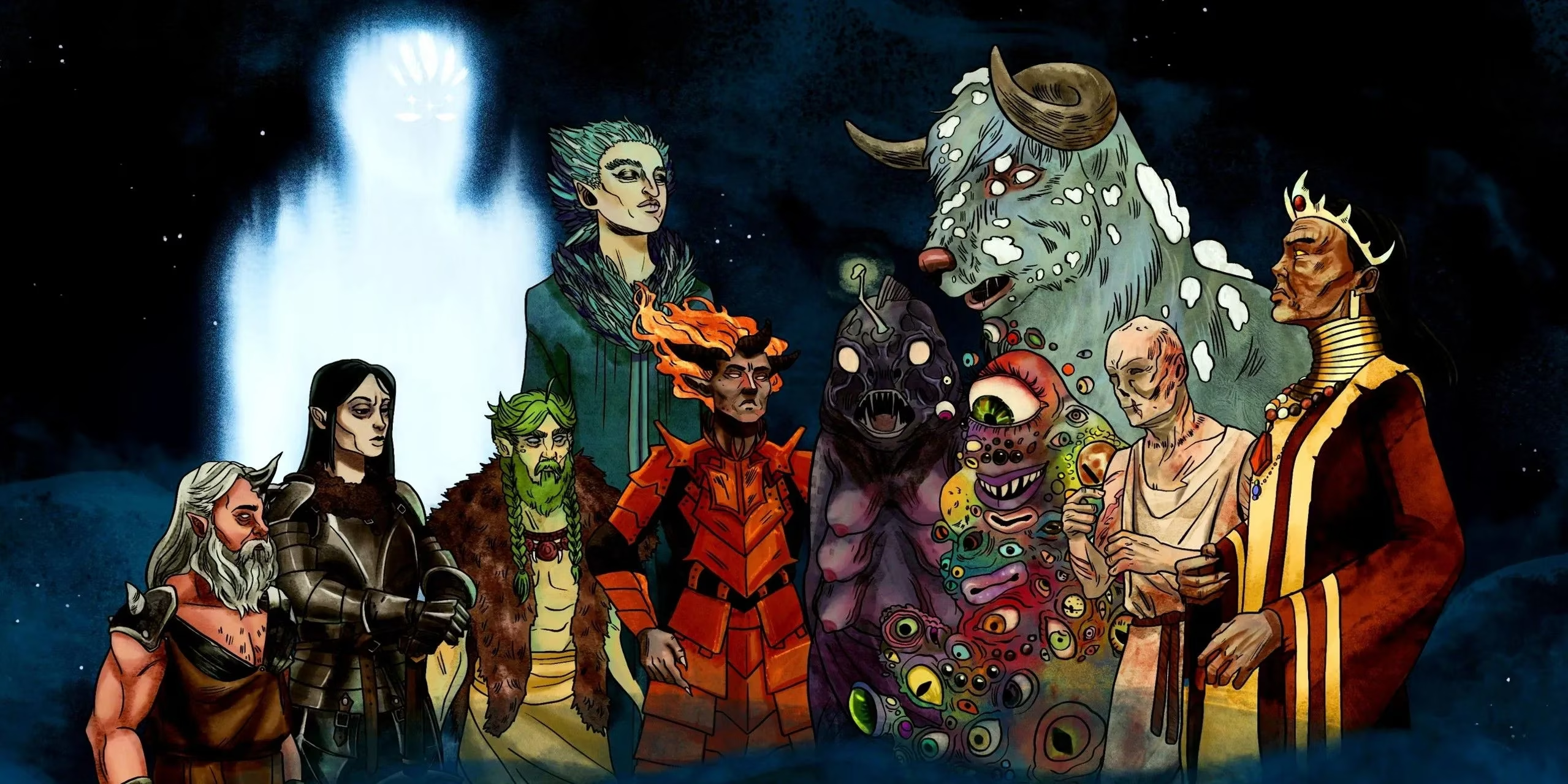
Avowed does technically abandon fixed classes. Players can invest points across three primary skill trees: ranger, fighter, and mage. On paper, that sounds flexible. A late-game wizard spell that grants the envoy a magical bow offers a nice blend of ranger and wizard. A greatsword-wielding fighter can dip into the ranger tree to improve gun handling. These hybrid possibilities exist, and they are welcome.
But are they exciting? That is harder to argue. Compared with Deadfire, which offered twelve base classes, multiclassing, and multiple subclasses for each class, Avowed's three trees feel extraordinarily slim. The freedom promised in Avowed's story does not translate especially well to its character building. It is not just about the number of spells or passives, either. The actual abilities and passives being offered rarely inspire the same creativity as the options in Pillars. A classless system should feel like a playground. Here, it often feels like a narrow hallway.
The lost flavor of Eora's classes
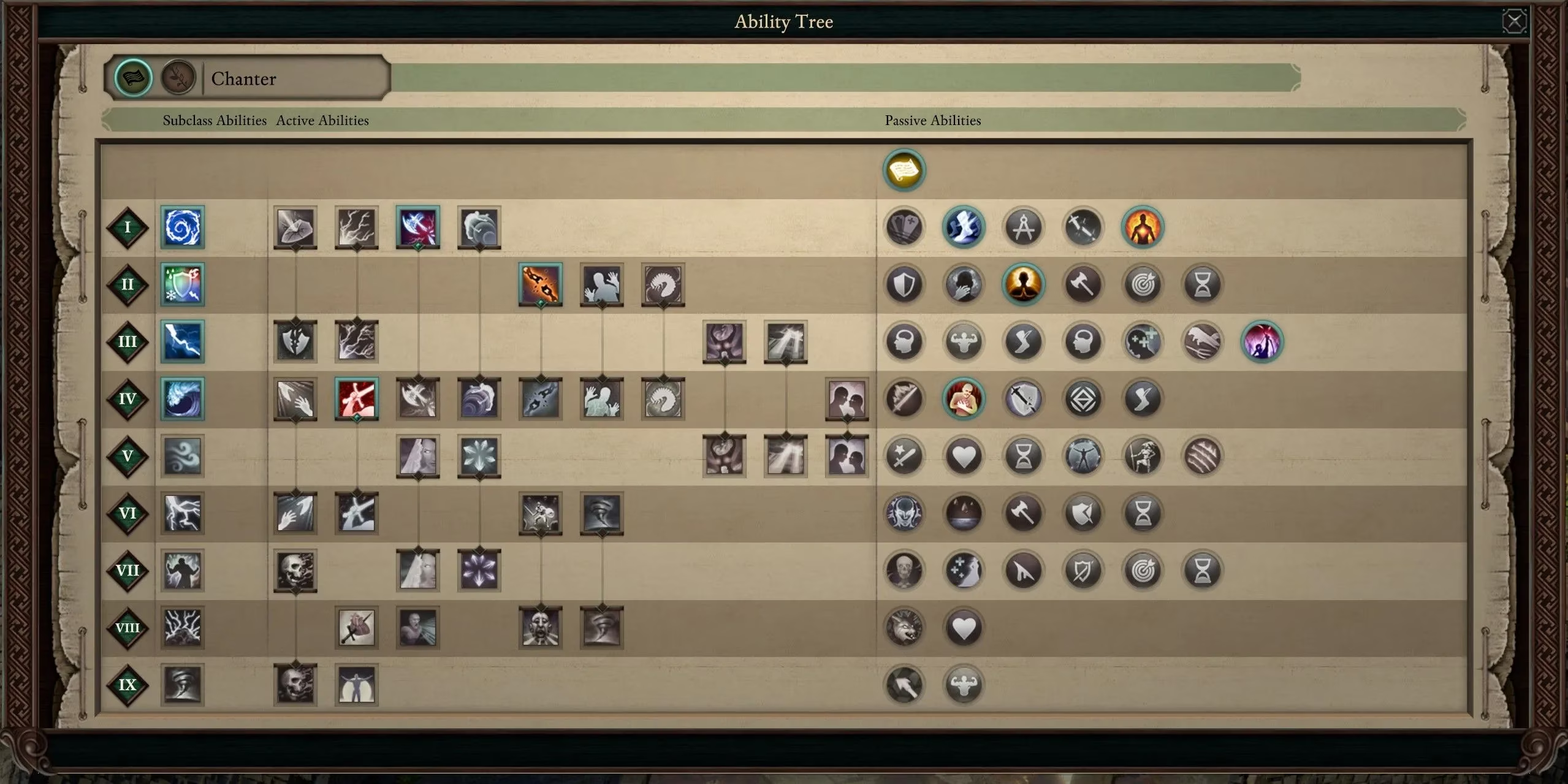
The biggest issue is not quantity, but identity. Pillars of Eternity introduced classes that were tightly woven into the world of Eora, both in gameplay and in lore. Consider the chanter. In Deadfire, chanters are almost like historians, collecting and using ancient oral traditions. In combat, they do not simply pick music-themed spells. Players assemble phrases into a chant that plays automatically while the chanter fights. Smart phrase usage creates overlapping buffs and a tangible sense of rhythm. Could that ever exist in Avowed's three trees? No, and that absence also removes potential dialogue options tied to a chanter's knowledge of history.
Then there is the cipher, a spellcaster-weapon hybrid that draws power from interacting with souls. Eora places enormous emphasis on souls, and ciphers reflect that perfectly. Their spell pool blends manipulation, deception, soul-rending cuts, and defensive buffs through soul-linking. In the lore, ciphers are useful allies but also treated with suspicion, which mirrors the general distrust of soul magic. That kind of setting-specific design is absent from Avowed's generic trio.
Even the familiar classes were twisted
What stings even more is that Pillars managed to make standard archetypes feel unusual. Monks locked their abilities behind a wound resource that could only be generated by taking damage. Clerics and paladins faced real consequences for failing to follow the tenets of their deity or order. Fighters, the most basic class, had a mix of passive and active abilities that created real decision-making in combat.
Compare that with Avowed's ranger, fighter, and mage. They are about as generic as a fantasy game can get, both narratively and mechanically. A player could theoretically build a monk-like character by stacking survivability passives on a fighter, but the thematic identity is lost. Why should a monk gain strength through harm? That question raised fascinating implications about Eora's monastic traditions. Avowed does not even ask it.
The table below highlights the regression.
| Feature | Pillars of Eternity / Deadfire | Avowed |
| Class count | 12 base classes, plus subclasses | 3 primary trees |
| Unique examples | Chanter, Cipher, Monk, Paladin, Priest | Ranger, Fighter, Mage |
| Multiclassing | Yes in Deadfire | Limited tree dipping |
| Narrative identity | Classes reflect culture and souls | Mostly generic fantasy archetypes |
A narrative loss, not just a mechanical one
These classes were not just combat kits. They added context to the world. Ciphers represented society's unease with soul magic. Companion subclasses in Deadfire showed how druids functioned in the storm-ridden Rauatai Kingdom. Chanters highlighted the importance of oral history and tradition. Even the immovable restrictions of Pillars classes helped create a truly fascinating world. In a genre where many franchises try to make re-theming classes approachable, Pillars embraced restrictions and became more distinct for it.
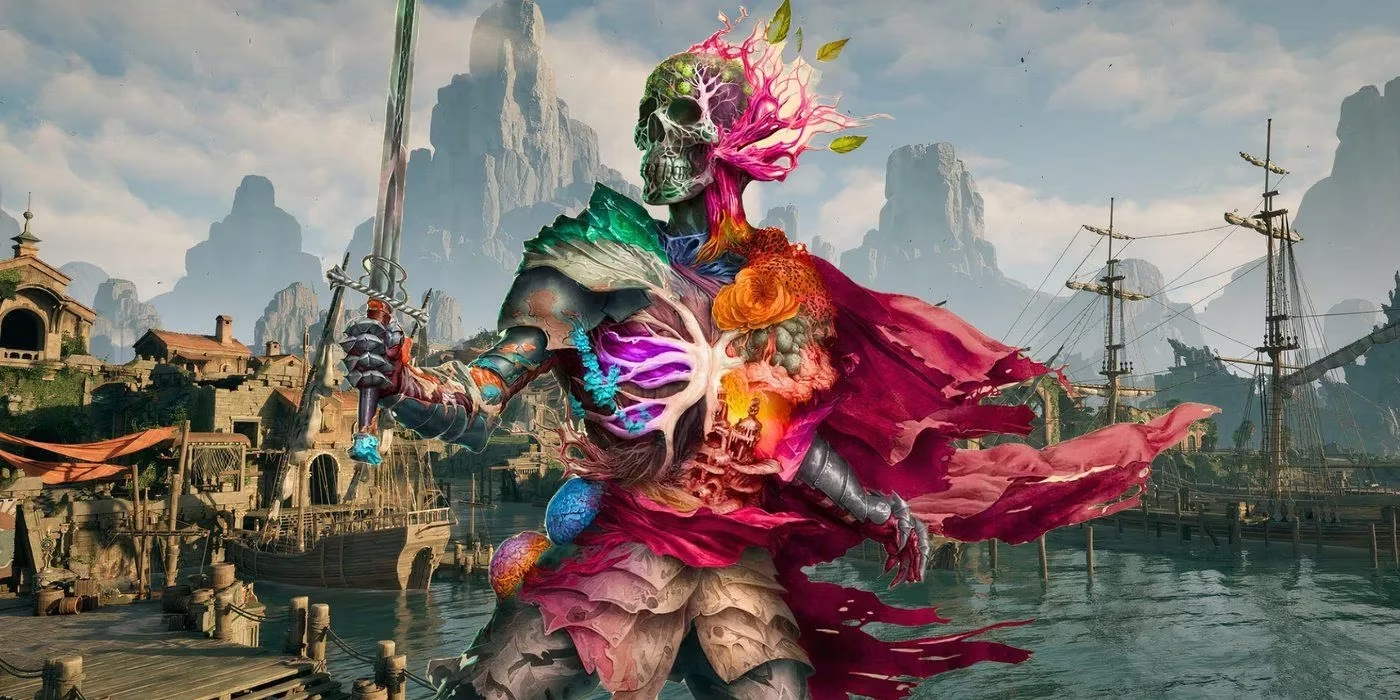
Looking ahead from 2026, there is still hope. Avowed's combat is flashy and enjoyable, and its companions may fill in some of the missing class identities. The mysterious godlike skill tree could add a spark for players who push deep into the game. But as a re-entry into Eora, Avowed's ability system remains a disappointing asterisk. If an Avowed 2 ever arrives, it would do well to remember chanters, ciphers, monks, and all the other strange offerings that made Pillars of Eternity special. Right now, anyone hoping for that level of creativity is left asking the same question: why leave the best ideas behind?