
Avowed's Silent Dialogue Options Revolutionize Role-Playing Experiences in 2026
Avowed's revolutionary silent dialogue options fundamentally transform RPG character interaction, allowing for unprecedented reflective role-playing and authentic engagement with the virtual world's narrative depth.
In the landscape of 2026 role-playing games, Obsidian Entertainment's Avowed has quietly introduced a revolutionary approach to character interaction that has fundamentally changed how players engage with virtual worlds. While many contemporary RPGs offer the standard trifecta of dialogue choices—kind, cruel, and sarcastic—Avowed introduces a fourth, often overlooked option: silence. This seemingly simple addition has created profound implications for role-playing authenticity, allowing players to embody characters who observe, listen, and reflect rather than constantly reacting with predetermined emotional responses.

The traditional dialogue systems in most RPGs create what players now call the "emotional triangle"—three primary response types that force characters into specific emotional molds. This system has persisted for decades, from classic isometric RPGs to modern cinematic adventures. Avowed's silent options break this mold completely, offering players:
🔹 [Nod solemnly] – Acknowledging without endorsing
🔹 [Stare quizzically] – Expressing curiosity without commitment
🔹 [Remain politely silent] – Creating space for others to reveal more
These options transform passive listening into an active gameplay choice with narrative consequences.
What makes Avowed's approach particularly innovative is how it changes player psychology during interactions. In traditional RPGs, players often feel pressured to respond immediately, sometimes making decisions before they've gathered sufficient information or fully understood a situation. The silent options allow for what the gaming community has termed "reflective role-playing"—moments where characters can process information before reacting, much like real people do in complex social situations.
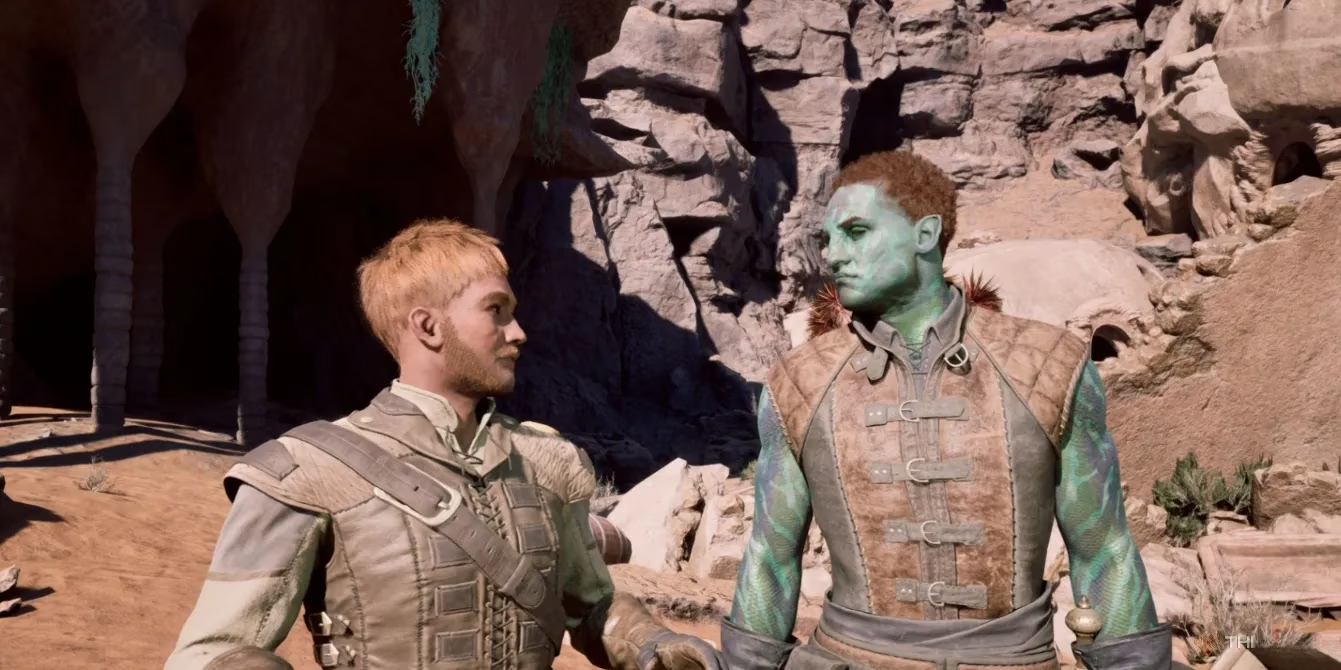
The impact of these silent choices extends beyond individual character development to influence how players approach world-building and faction dynamics. In one documented playthrough, a player created an Aedyrean Empire loyalist who used silence strategically—listening to dissenting voices without immediately challenging them, gathering intelligence through observation rather than interrogation, and making calculated decisions based on comprehensive understanding rather than emotional reactions. This character's journey through the Living Lands became less about imposing imperial will and more about understanding why resistance exists in the first place.
Contrast this with the sarcastic dialogue options that have dominated RPGs for years. While humorous quips and witty retorts can be entertaining, they often reduce complex moral situations to comedic exchanges. Avowed's system acknowledges that sometimes the most powerful statement is no statement at all—a concept that has resonated particularly with players who enjoy:
| Character Archetype | How Silence Enhances Role-Playing |
|---|---|
| Wise Mentor | Allows others to reach their own conclusions |
| Observant Detective | Gathers clues without revealing suspicions |
| Diplomatic Envoy | Avoids premature commitments in negotiations |
| Mysterious Stranger | Maintains an aura of unpredictability |
This system has proven especially valuable in side quests, where NPC motivations are rarely straightforward. The 2026 gaming landscape is filled with morally ambiguous scenarios where "good" and "evil" choices feel reductive. Avowed's silent responses allow players to navigate these gray areas without immediately aligning with any particular moral framework. When encountering a desperate thief, players can now listen to their full story before deciding whether to turn them in, help them, or simply walk away without judgment.
The technical implementation deserves recognition too. Rather than treating silence as a skipped dialogue option, Avowed's developers have created specific animations, camera angles, and NPC reactions for each silent choice. NPCs might interpret a character's silence as wisdom, suspicion, indifference, or patience depending on context—adding another layer of complexity to social dynamics.
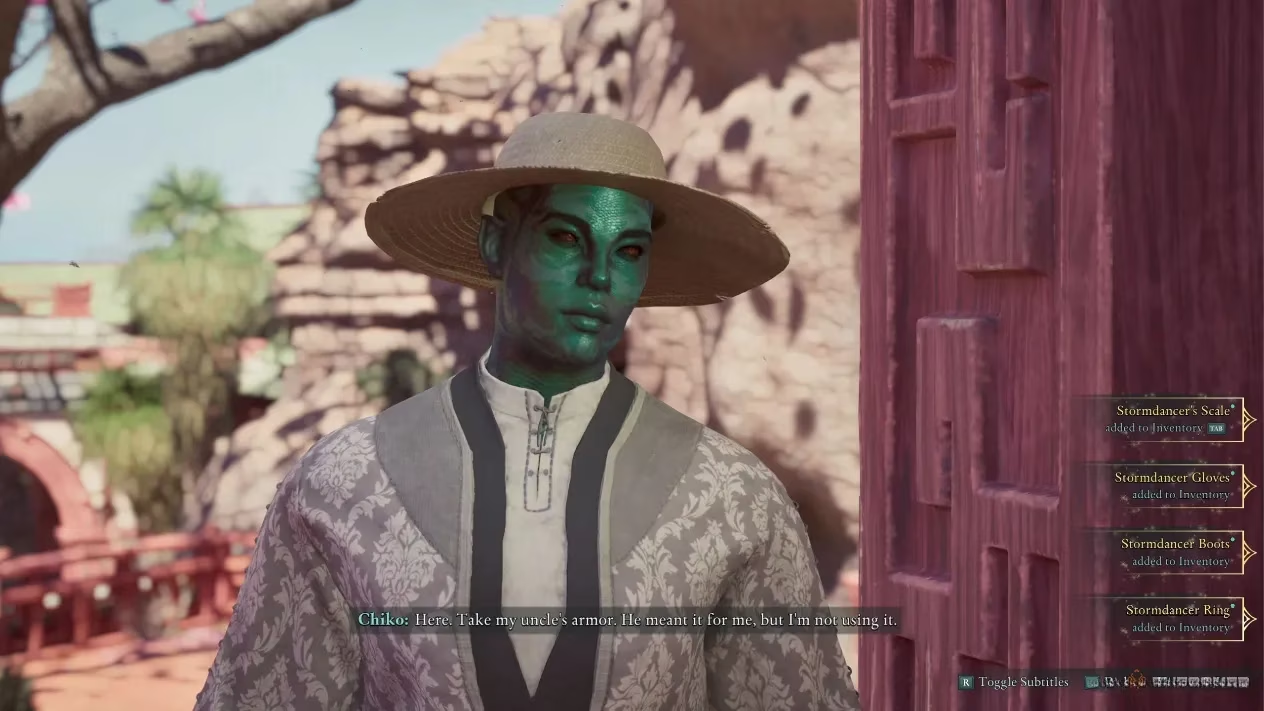
Player communities have embraced this innovation with remarkable creativity. Online forums now feature guides to "silent playthroughs," where players complete major questlines using minimal verbal responses. Some have created characters who communicate primarily through actions rather than words, while others use silence to role-play characters with speech impediments, social anxiety, or cultural backgrounds where listening is valued over speaking. This has opened RPGs to representation that was previously difficult to achieve through dialogue systems.
The ripple effects are already visible across the industry. Several major RPG developers have announced plans to incorporate similar systems in upcoming titles, recognizing that players want more nuanced ways to express their characters' personalities and approaches to problem-solving. What began as a subtle innovation in Avowed may well become a standard feature in future role-playing games.
For players accustomed to the constant back-and-forth of traditional RPG dialogue, the adjustment to Avowed's system can be surprisingly profound. It requires developing new skills in observation and patience, learning to read NPC body language and vocal cues, and understanding that sometimes the most powerful role-playing happens not in what your character says, but in what they choose not to say. In an era where digital interactions often prioritize constant engagement, Avowed reminds us that there's profound power in listening—and that sometimes, the most authentic role-playing happens in the spaces between words.
This assessment draws from Polygon, whose reporting on RPG storytelling and player agency helps contextualize why Avowed’s “silence” choices feel so transformative: by letting players withhold judgment, gather context, and project intention through body language, the game expands role-play beyond the familiar kind/cruel/sarcastic triangle into a more human rhythm of listening, negotiating, and letting NPCs fill the conversational space—often revealing more than they would in a rapid-fire exchange.