
Avowed's Tonal Journey Through Eora and the Pillars Legacy
Avowed brings Pillars of Eternity's Eora to action RPG fans, balancing grounded political conflict with metaphysical mystery.
Obsidian Entertainment’s Avowed occupies a peculiar place in the studio’s catalogue. It is an action role-playing game set in Eora, the same world as the acclaimed Pillars of Eternity CRPGs, yet it is designed for a much broader audience than those games ever reached. By 2026, with Avowed having launched in February 2025, that adaptation strategy is no longer theoretical. The game stands as a case study in how a studio can carry a dense, beloved setting into a new genre without assuming that every player knows its history. The Pillars games are celebrated for their intricate lore, political entanglements, and metaphysical mysteries, but CRPGs remain relatively niche. Avowed therefore had to introduce Eora to players who might never have encountered the Pillars series at all.

From its first public appearance, Avowed raised questions about tone. The 2020 announcement trailer briefly named Eora in its description, but the mood felt more desolate and apocalyptic than the Pillars games’ characteristic blend of grounded politics and esoteric divine conflict. Later trailers shifted attention toward the Living Lands and the Dreamscourge, a metaphysical fungal disease, which looked closer to the narrative texture associated with Eora. That shift was not accidental.
🎭 A Course Correction in Early 2021
Game director Carrie Patel told Kinda Funny Gamescast that the project changed direction in early 2021. “There was a shift,” she said. According to Patel, the team’s current target is Pillars of Eternity II: Deadfire, which balances “this very grounded political reality and this very grounded political conflict” with “this very metaphysical, kind of esoteric divine conflict and backstory.” Deadfire also offers tonal variety: serious conflict, strange mysteries, and characters discovered along the way. Patel described the change as a move toward something closer to the Pillars aesthetic—a setting and narrative approach that felt true to Obsidian’s strengths and to what makes the IP unique.
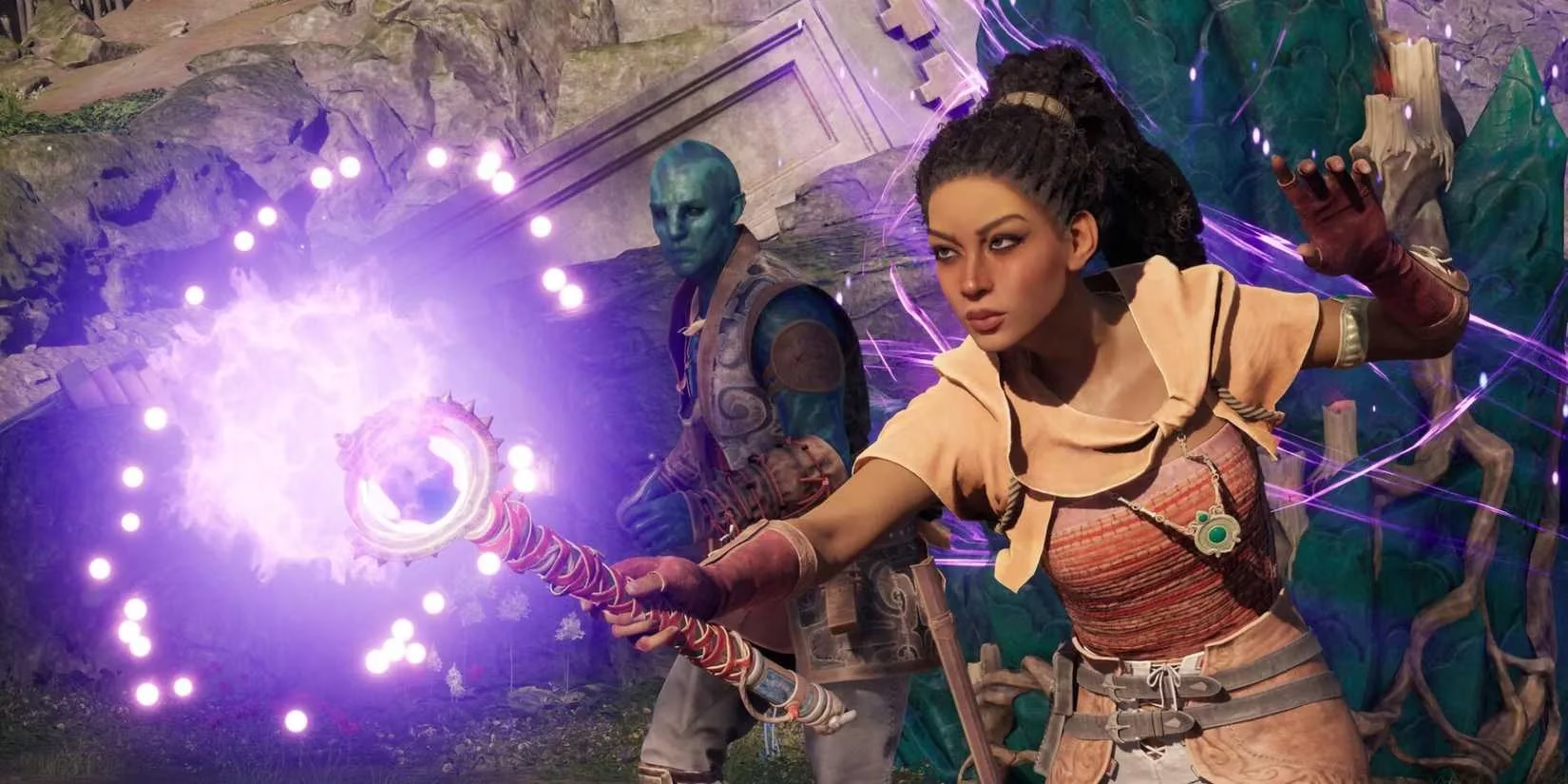
Gameplay director Gabe Paramo added a useful caveat: although Obsidian has shown vibrant locations, Avowed still contains plenty of darkness. That balance matters. A game can be colorful without being weightless, and it can be dark without being monochrome. The Living Lands may look more painterly than the isometric Pillars games, but the Dreamscourge gives the adventure a persistent unease. The disease is not merely a gameplay obstacle; it is a metaphysical condition that distorts land, creatures, and perhaps minds. In that sense, Avowed’s surface-level brightness can coexist with the eerie, philosophical undercurrents that Pillars fans expect.
| Pillars Strength | Avowed’s Intended Echo |
|---|---|
| Grounded political conflict | A world shaped by factions and practical stakes |
| Esoteric divine mystery | The Dreamscourge and its metaphysical fungal nature |
| Character-driven tonal variety | Companions and discoveries across the Living Lands |
| Dark undercurrents | Vibrant locations that still hide danger |
🧭 A 3-D Pillars of Eternity, Not an Elder Scrolls Clone
The director’s comments support the view that Avowed is less Obsidian’s answer to The Elder Scrolls and more a 3-D extension of Pillars of Eternity. The distinction is important. Avowed takes place only a couple of years after Pillars of Eternity II: Deadfire, so the world’s recent history remains fresh. Players who know Deadfire will recognize the aftermath; newcomers will meet a setting already in motion. That creates a challenge: Avowed must reward familiarity without requiring homework. It must let veterans notice continuity while giving newcomers enough context to care about the Living Lands on its own terms.
By 2026, the release conversation has changed. The 2024 interview looked forward to an unconfirmed launch; Avowed has since arrived, and audiences can judge how well the final game reconciled its vibrant marketing with its darker Pillars DNA. The early tonal wobble is now part of the game’s public history, but so is the corrective. Obsidian did not simply transplant a CRPG into first person. It chose a setting, a story approach, and a balance of light and shadow that reflected its strengths.
-
🌍 Eora remains the foundation, but Avowed introduces it through the Living Lands rather than assuming prior knowledge.
-
🍄 The Dreamscourge supplies a metaphysical mystery that echoes Pillars’ interest in strange divine and natural forces.
-
🎭 Deadfire serves as the tonal target, blending political reality with esoteric conflict and character variety.
-
🕯️ Darkness still exists beneath the color, as Paramo’s comments make clear.
-
🧭 The game is positioned as a 3-D Pillars experience, not a direct rival to other first-person fantasy RPGs.
For players in 2026, Avowed’s value as an adaptation lies in that negotiation. It is a fantasy RPG with vivid vistas and strange magic, but its roots are in a series known for conversation, factional friction, and divine ambiguity. The game’s tonal journey—from an early apocalyptic hint to a Deadfire-inspired balance—shows how Obsidian tried to make Eora legible to a wider audience without flattening it. Whether Avowed fully succeeds is a matter of taste, but its approach remains instructive: a shared universe can stretch across genres if the adaptation respects both the old lore and the new player’s need for a way in.