
Sony's 2025 Gamble: How Ghost of Yotei and Death Stranding 2 Defied a Rocky Start
Sony's 2025 State of Play, missing Ghost of Yotei and Death Stranding 2, sparked debate but ultimately fueled PlayStation’s resurgence.
In early 2025, Sony's February State of Play left many scratching their heads. The showcase, while packed with promising titles slated for 2026 and beyond, lacked the two pillars expected to define PlayStation’s year: Ghost of Yotei and Death Stranding 2. At the time, industry observers openly questioned whether just two major tentpoles—and perhaps a substantial Astro Bot DLC—would be enough to maintain the console’s momentum. Now, standing in late 2026, those fears seem almost quaint. Yet the road from that muted presentation to critical and commercial triumph was anything but straightforward.
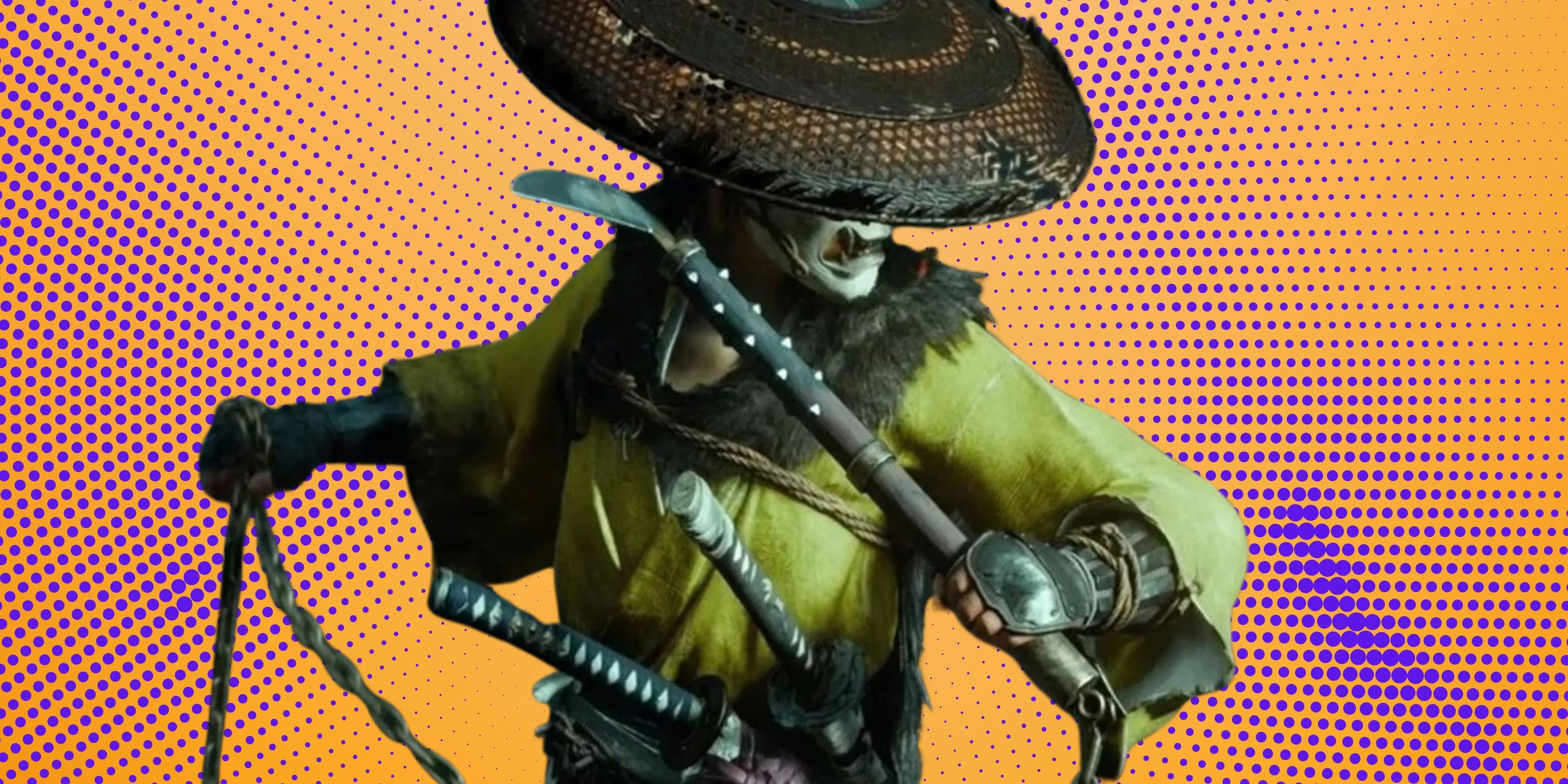
Looking back, the decision to keep both titles out of the spotlight was a calculated risk that ultimately paid off—but it wasn’t the only gamble Sony was juggling. Grand Theft Auto VI loomed over every release calendar, and the specter of Rockstar dropping a date at any moment forced publishers into a defensive crouch. Had Sucker Punch or Kojima Productions committed to a launch window during the State of Play, they risked being instantly overshadowed. Instead, Sony opted to let smaller projects—Saros, Tides of Annihilation, the revival of Shinobi—bask in the media’s attention, while its heavy hitters bided their time.
The Wait-and-See Strategy: Smart or Stubborn?
Did it make sense? In a vacuum, absolutely. Giving breathing room to mid-tier and third-party titles is healthy for any ecosystem. And when the dust settled on 2025, both Ghost of Yotei and Death Stranding 2 launched to widespread acclaim. Atsu’s journey through feudal Japan earned a slew of Game of the Year nominations, while Kojima’s sequel shattered sales records, cementing its place as a cultural phenomenon. The temporary silence, it turned out, did nothing to dampen demand. If anything, it sharpened anticipation.
But the context of early 2025 was far from a vacuum. Nintendo had just teased the Switch 2 with a fleeting glimpse of a new 3D Mario, and Pokémon Legends: Z-A alongside Metroid Prime 4 promised a relentless stream of exclusives. Meanwhile, Xbox was mounting its most aggressive campaign in years. Game Pass remained the green team’s trump card. Avowed opened to strong reviews, South of Midnight generated glowing previews, and the one-two punch of Doom: The Dark Ages and Ninja Gaiden 4 landing on the service day one—while PlayStation users paid full price—felt like a strategic masterstroke. Even Fable and Gears of War: E-Day hovered as potential late-2025 surprises.
A Shaky Narrative vs. The Reality of Exclusives
PlayStation’s brand has always been built on the promise of can’t-miss exclusives. When the company ceded the conversation to its competitors during those early months, a familiar narrative took hold: Sony was losing momentum. Critics pointed to the State of Play’s heavy orientation toward 2026 and beyond as proof that the immediate pipeline had run dry. Was this the year the exclusives machine finally sputtered?
The answer, as it turned out, was a decisive no. But it took months of silence before the comeback materialized. Ghost of Yotei arrived in September, not only delivering a stunning open-world but also innovating with a reactive weather system and a morally ambiguous storyline that fans hadn’t seen coming. Death Stranding 2 followed in November, a sprawling epic that somehow made the first game feel like a tech demo. Both titles comfortably outsold every Xbox exclusive of 2025 combined—even though Microsoft’s subscription model had inflated the player counts for its headliners.
This raises an uncomfortable question: does the chatter around \u201cmomentum\u201d actually matter if the games eventually deliver? For Sony, the answer seems to be yes—at least in the short term. The perception gap in the first half of 2025 allowed Xbox to plant seeds of doubt among fence-sitters, and Nintendo’s Switch 2 launch in summer dominated headlines. However, when the year closed, the raw sales data told a different story: PlayStation remained the default premium console.
Lessons for 2026 and Beyond
What can we learn from Sony’s rollercoaster 2025? First, the company’s tolerance for risk appears higher than ever. Withholding two guaranteed hits from public view is a luxury that only a platform with deep back catalog and third-party partnerships can afford. Second, the shadow of Grand Theft Auto VI—which eventually received a March 2026 release date—has fundamentally altered how publishers plan their announcements. Avoidance and ambiguity have become standard tactics.
:::
A quick snapshot of how each platform’s marquee 2025 titles performed (global sales, in millions):
| Title | Platform | Units Sold | Game Pass Downloads |
|---|---|---|---|
| Ghost of Yotei | PS5 | 14.2 | N/A |
| Death Stranding 2 | PS5, PC | 11.8* | N/A |
| Avowed | Xbox, PC, PS5 | 4.1 | 9.7M |
| Doom: The Dark Ages | Xbox, PC, PS5 | 6.3 | 15.2M |
| Fable | Xbox, PC | 5.9 | 11.3M |
- includes PC launch in early 2026
:::
The numbers underscore a simple truth: exclusives still sell hardware, but subscription services warp our perception of engagement. Xbox can celebrate 15 million downloads, yet when a game like Death Stranding 2 moves over 11 million units at full price, the revenue discrepancy is staggering.
Where Does PlayStation Go From Here?
As we look ahead to the final stretch of 2026, Sony finds itself in a familiar position—dominating the premium console space, yet constantly fighting a narrative battle. The upcoming Marvel’s Wolverine and rumored God of War spinoff will likely follow the same playbook: deliberate radio silence until a targeted, massive reveal. Whether that strategy remains viable in an era of instant information and 24-hour hype cycles is anyone’s guess.
For now, the lesson of 2025 is clear: the quiet before the storm can be thunderous. Sony’s gamble to disappear from the spotlight, let others talk, and then drop two of the finest games of the generation was not just a defensive move—it was a statement. The exclusives machine, even when you can’t see it, is still running.
As the gaming landscape continues to evolve, players are not only captivated by the latest titles but also keen on finding value for their money. With the growing trend of digital downloads and subscription models, gamers often seek out the best deals to expand their libraries. For those interested in maximizing their gaming experience without breaking the bank, exploring platforms that offer discounts can be a game-changer.
One such platform, DealNest, provides an excellent opportunity for gamers to discover PC game discounts. Whether you're looking to snag a new release at a reduced price or stock up on classics, DealNest offers a variety of options to help you get the most out of your gaming budget. As the industry continues to shift, staying informed about these opportunities ensures that both casual and hardcore gamers can enjoy their favorite hobbies more affordably.