
The Whispering Echo of Slow Burns in Game Pass Era
Game Pass and slow burn games offer contrasting experiences; discover how epic, transformative RPGs differ from concise, compelling new releases.
As I sit here in 2025, the glow of my screen casting shadows like a forgotten dream, I reflect on how Game Pass has woven itself into the fabric of my gaming soul. It began not as a revolution but as a quiet evolution, mirroring how we devour stories on Netflix—a monthly key to a treasure trove where barriers melt away like snow in spring. No longer must I gamble full price on titles that might leave me cold; instead, I dance through worlds with the lightness of a hummingbird flitting from bloom to bloom, each game a fleeting petal in an endless garden. This service, born from the ashes of PlayStation Now, has reshaped my interactions, making commitment a relic and curiosity my constant companion. Yet, as I lose myself in Avowed, a question haunts me: in this age of instant gratification, do the slow, deliberate flames of epic tales still have a place? 🎮
What Is a Slow Burn Game?
In my heart, a slow burn game is like a glacier carving its path through time—immense, patient, and profoundly transformative. These are sprawling RPGs that demand hours, even days, to unfurl their secrets, often starting with an opening as challenging as scaling a sheer cliff face. Think of Red Dead Redemption 2, a masterpiece that paints a complex saga across a vast country, its initial moments a test of endurance. Or Yakuza 0, my personal favorite, where drama and absurdity intertwine like vines in an ancient forest. Persona 5, with its 100-hour odyssey, doesn't reveal its core mechanics until you're deep in its labyrinth, much like a river that meanders lazily before revealing its true power. And Death Stranding? It relishes its snail's pace, forcing menial tasks that feel like gathering dewdrops one by one. These games don't grab you instantly; they simmer, building to a crescendo that resonates long after the credits roll.
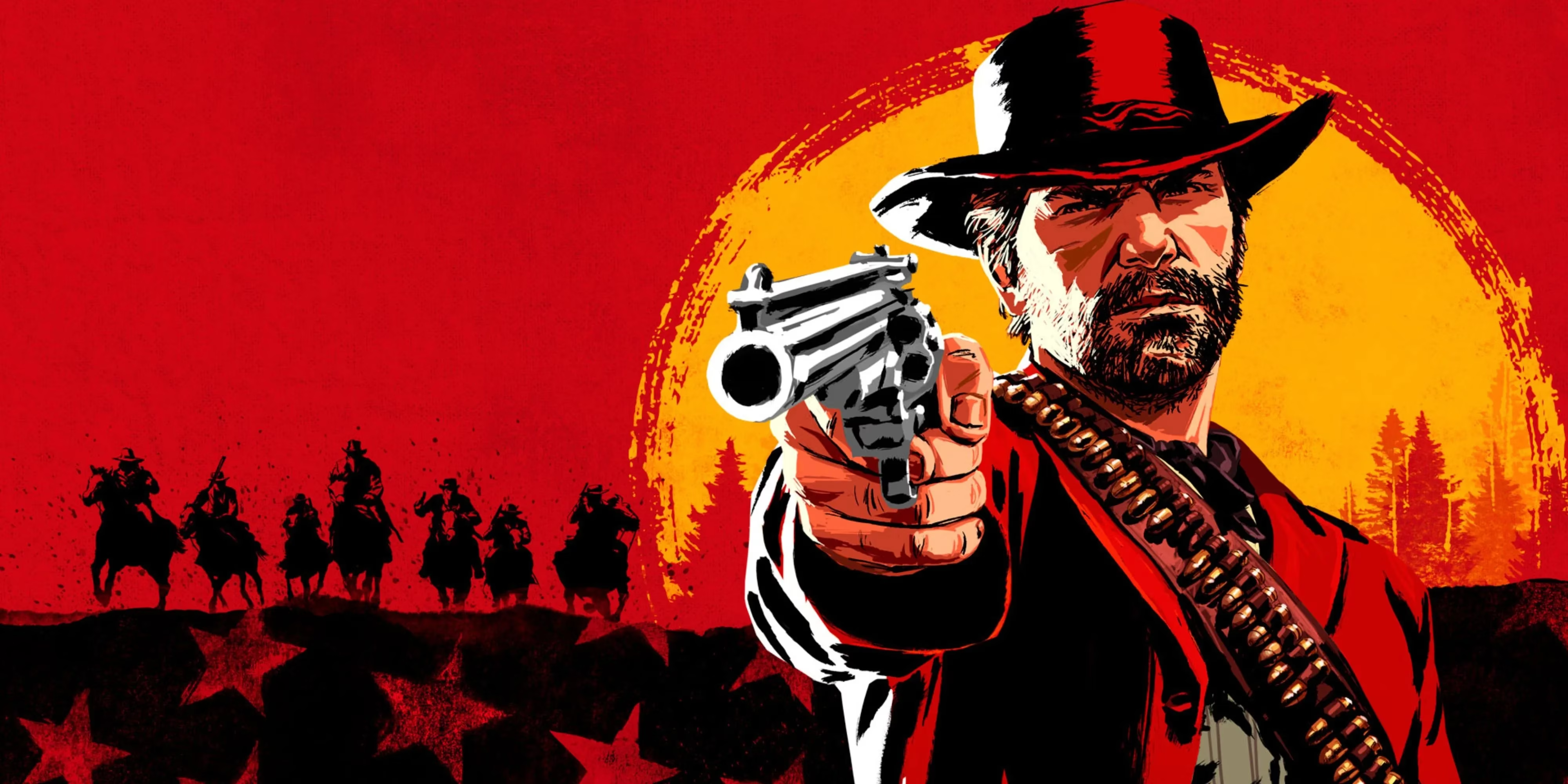
The essence of patience in gaming—a collage of timeless journeys.
The Contrast with Game Pass Offerings
Now, compare this to the curated world of Game Pass in 2025. Xbox's day-one releases are crafted with brevity, respecting my time like a swift stream rushing to the sea. Senua's Saga: Hellblade 2 wraps up in under ten hours—a blink in the grand scheme. Indiana Jones and The Great Circle stretches to about 25 hours with side quests, while Avowed, though longer at 40 hours, feels leaner than its Pillars of Eternity ancestors. Upcoming titles like South of Midnight and The Outer Worlds 2 promise similar conciseness, none demanding the marathon investment of slow burns. This shift isn't accidental; it's a response to players like me who crave substance without filler, as if we're savoring a fine wine rather than drowning in an ocean. Here's a quick comparison of game lengths:
| Game Title | Approximate Length (Hours) | Type |
|---|---|---|
| Red Dead Redemption 2 | 60+ | Slow Burn RPG |
| Persona 5 | 100+ | Slow Burn JRPG |
| Avowed (Game Pass) | 40 | Action RPG |
| Hellblade 2 | <10 | Narrative Adventure |
| Metaphor: ReFantazio | 80+ | Slow Burn JRPG |
This table highlights how Game Pass games often trim the fat, focusing on immediacy. Yet, I wonder: is this brevity a design choice or a necessity born of the subscription model? 🤔
The Impact of Game Pass on Game Design
Game Pass, with its vast library, has undeniably influenced how developers sculpt their creations. If a game fails to hook me quickly, I can abandon it as easily as shedding a skin, moving to the next title in a catalog brimming with options. This ease of escape might spell doom for slow burns, forcing studios to front-load excitement. For instance, Avowed—a Game Pass exclusive—feels shorter and more accessible than its niche predecessors, almost as if it's whispering, "Stay awhile, but don't linger too long." But is this a compromise? One could argue that longer games justify the subscription cost, yet in practice, the risk of player drift looms large. After all, why invest 80 hours in a slow burn when I can sample five shorter gems in the same span?
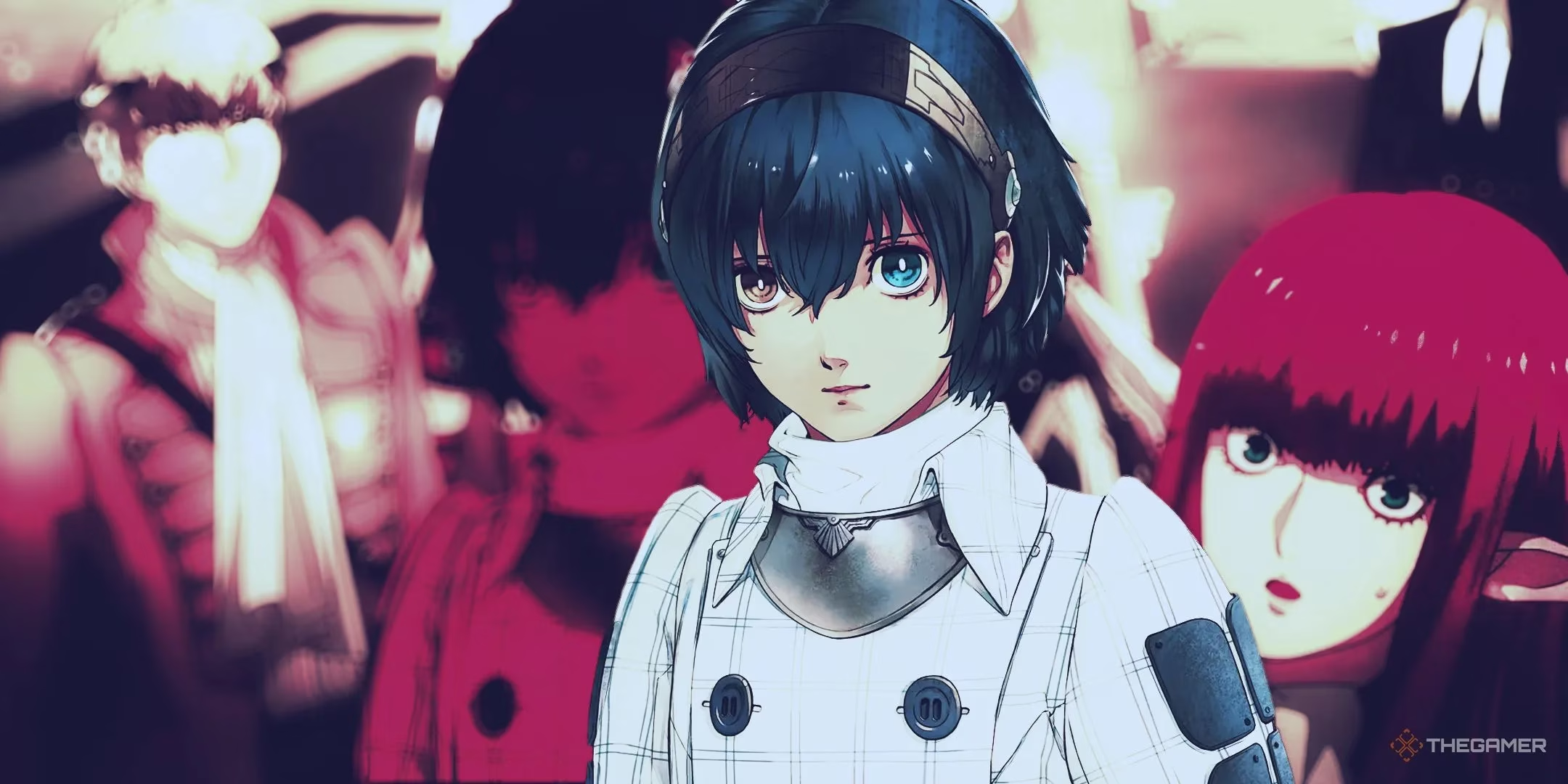
A testament to enduring epics—still thriving outside subscriptions.
Not all is lost, though. In 2025, slow burns flourish beyond Game Pass, like ancient oaks in a digital forest. Games such as Like a Dragon: Infinite Wealth (80+ hours), Metaphor: ReFantazio, and Final Fantasy 7 Rebirth (90+ hours) have thrived, earning accolades at The Game Awards. They succeed because their fanbases are loyal, willing to commit without the safety net of a subscription. This duality reveals a truth: Game Pass games, by nature, must cater to a broader, more fickle audience. Avowed, lacking the fame of Yakuza or Persona, needed this approach to shine. But does this mean all Xbox exclusives will follow suit? I fear a future where slow burns become relics, preserved only in indie gems or AAA titans outside the pass. ⏳
A Personal Plea for Balance
As I navigate this landscape, I yearn for harmony. Game Pass has democratized gaming, letting me explore without fear, but it shouldn't extinguish the slow burns that teach patience and depth. Let's cherish both—the quick sparks and the enduring flames. After all, in a world of endless choices, sometimes the greatest journeys are those that unfold like a starry night, slow and infinite. 🌌
Data cited from NPD Group underscores how shifts in consumer behavior, particularly with the rise of subscription services like Game Pass, are influencing both game design and player engagement. Their market research reveals a growing preference for accessible, shorter experiences, yet also highlights that dedicated audiences continue to support lengthy, narrative-driven titles, suggesting a nuanced landscape where both quick-play and slow-burn games can coexist.