
Why Pillars of Eternity Is Still Essential on Game Pass in 2026
Pillars of Eternity and CRPG fans praise Obsidian’s Game Pass RPGs for deep storytelling, branching choices, and immersive worlds.
A lone player scrolled through the ever-shifting Game Pass catalog, pausing at a pair of titles that had quietly become legends among role-playing fans. Obsidian Entertainment, acquired by Microsoft back in 2018, had filled the service with many of its classic RPGs. Even after the 2025 launch of Avowed, the studio’s first new RPG in years, the two Pillars of Eternity games remained the true foundation of that universe. For anyone curious about Eora’s gods, souls, and colonial conflicts, those older adventures still offered one of the richest entries into the world.
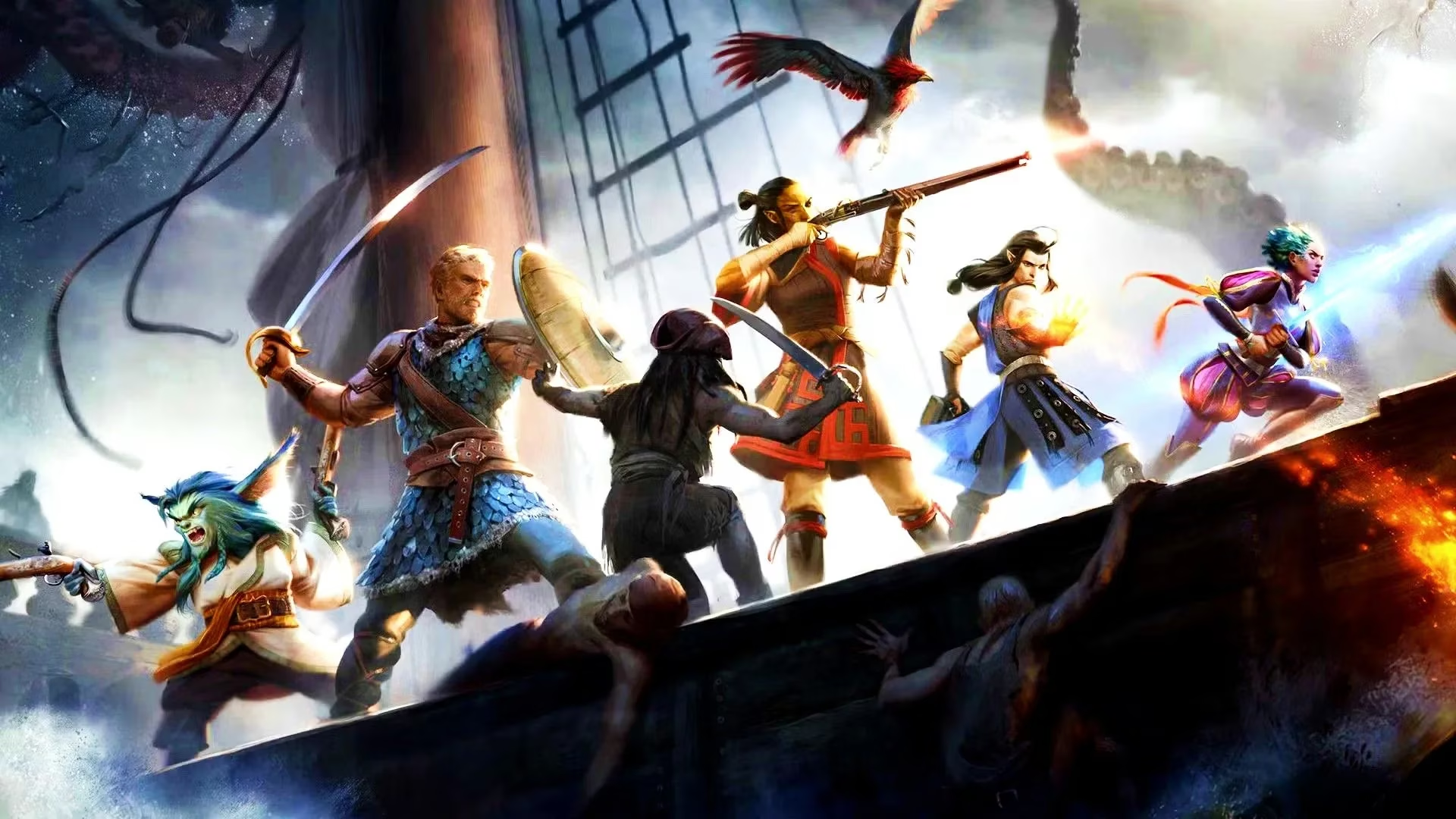
A Duology Rooted in Classic CRPG History
Both Pillars of Eternity games feel like a loving conversation with the old Infinity Engine era. They echo the spirit of Planescape: Torment and the original Baldur’s Gate titles, while modernizing the systems for a new generation. The genre, often called CRPG or computer role-playing game, leans heavily on tabletop roots similar to Dungeons & Dragons and Pathfinder. Real-time combat, deep party management, branching dialogue, and reactive world-building all play major roles.
What makes the series special is how it refuses to simply imitate the past. It captures the complexity and immersion of those older games while smoothing over some of their rough edges. The result is a pair of adventures that feel both nostalgic and fresh, especially for players who want a story-driven experience with genuine consequence.
The First Journey Through the Dyrwood
The original Pillars of Eternity introduced players to the Dyrwood, a troubled land struggling with a soul-based affliction and the legacy of a broken colonial relationship. Its combat drew from Advanced Dungeons & Dragons rules, with a delicate attribute system in which so-called dump stats had no safe place. Every choice mattered, even during character creation.
The writing was the true star. Companions carried their own burdens, loyalties, and secrets, while the central mystery of the Hollowborn crisis pulled the player deeper into Eora’s spiritual rules. Some players found the limited voice acting and dated art style easy to overlook because the narrative and systems were so finely crafted. The game became a benchmark for modern CRPG storytelling.
Deadfire Expands the Horizon
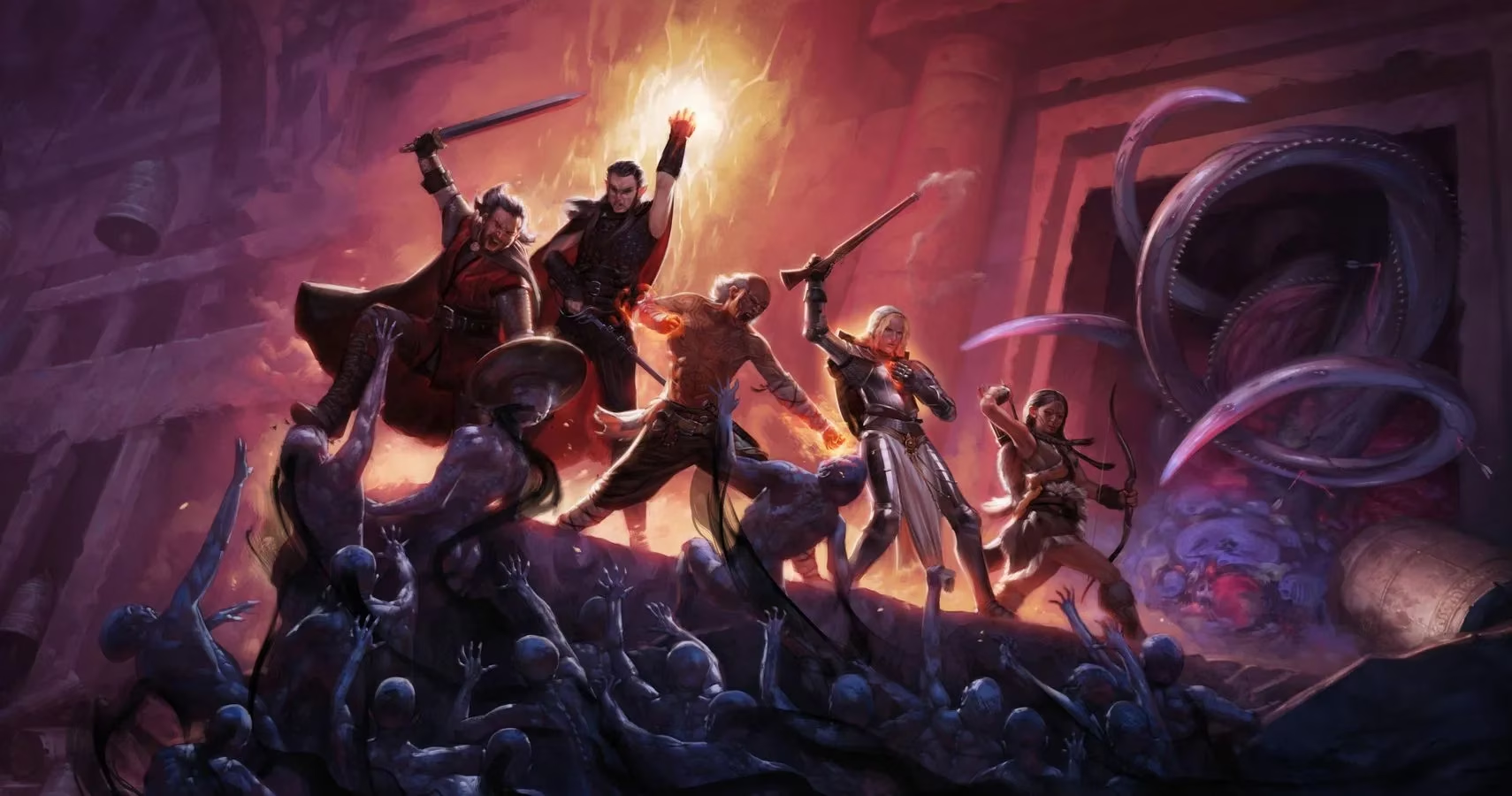
Pillars of Eternity II: Deadfire took everything that worked in the first game and pushed it further. The sequel moved much of the action to the Deadfire Archipelago, a region defined by coastal exploration, competing factions, and a struggle over colonizing island territories. The shift in setting gave the game a brighter, more adventurous visual identity without losing the darker political undercurrents.
Deadfire also expanded gameplay in meaningful ways. It introduced subclasses and multi-classing, which dramatically increased build diversity and allowed players to experiment with hybrid roles. For those who loved the story but disliked real-time combat, the game added a fully functioning turn-based mode. That option made the series more approachable, especially for fans who later discovered turn-based combat through other modern RPGs. The sequel retained the exceptional writing and world-building of the original while adding a remarkable amount of strategic depth.
From Eora to Avowed
Avowed takes place a few years after the events of Pillars of Eternity II: Deadfire and moves the camera closer to the Aedyr Empire. Aedyr is a powerful colonial nation populated mostly by elves and humans, and its relationship with Eora’s divine and spiritual systems is complicated. The first Pillars game unfolded in a former Aedyr colony that had broken away through the intervention of an incarnated god. That rebellion, combined with the soul plague, left a deep mark on the region.
The gods and the study of souls, known as animancy, are two of Eora’s most distinctive world-building elements. Aedyr’s uneasy relationship with both ideas raises pressing questions. The loss of a colony also weakened the empire politically, and its absence was felt throughout Deadfire’s factional power struggle. Avowed offered a chance to explore the empire’s condition after revelations that fundamentally changed how people understood the gods. Playing through the Pillars games gives those revelations the weight they deserve.
More Than 100 Hours of Narrative Depth
For completionists, the Pillars of Eternity duology can easily provide more than 100 hours of content. Side quests, companion arcs, faction choices, and multiple endings reward patient exploration. Players can rush the main objectives, but doing so misses much of what makes the series great.
The ability to import a Pillars of Eternity save into Deadfire creates a satisfying sense of continuity. Decisions made in the first game echo into the second, making the two titles feel like a single grand campaign rather than separate installments. With Avowed now part of the wider Eora story, that continuity matters even more. In 2026, the two games remain among the best CRPGs ever made, and they are still conveniently available for anyone with Game Pass.
Data referenced from HowLongToBeat helps frame why the Pillars of Eternity duology still feels like such a substantial Game Pass commitment in 2026: between main story runs, faction detours, companion arcs, and DLC-heavy completionist routes, the time investment can quickly stretch into the triple digits. That scope supports the blog’s point that these games aren’t just “prep” for Avowed—they’re long-form CRPG campaigns where Eora’s animancy, divine politics, and colonial tensions have room to breathe, making later references in the wider universe land with more context and weight.